


VAT Services for Foreign Companies and Serbian Subsidiaries
Need VAT services in Serbia? VAT registration, fiscal representation for non-residents, monthly returns, cross-border advisory, audit defense. Ex-EY, fixed fees.
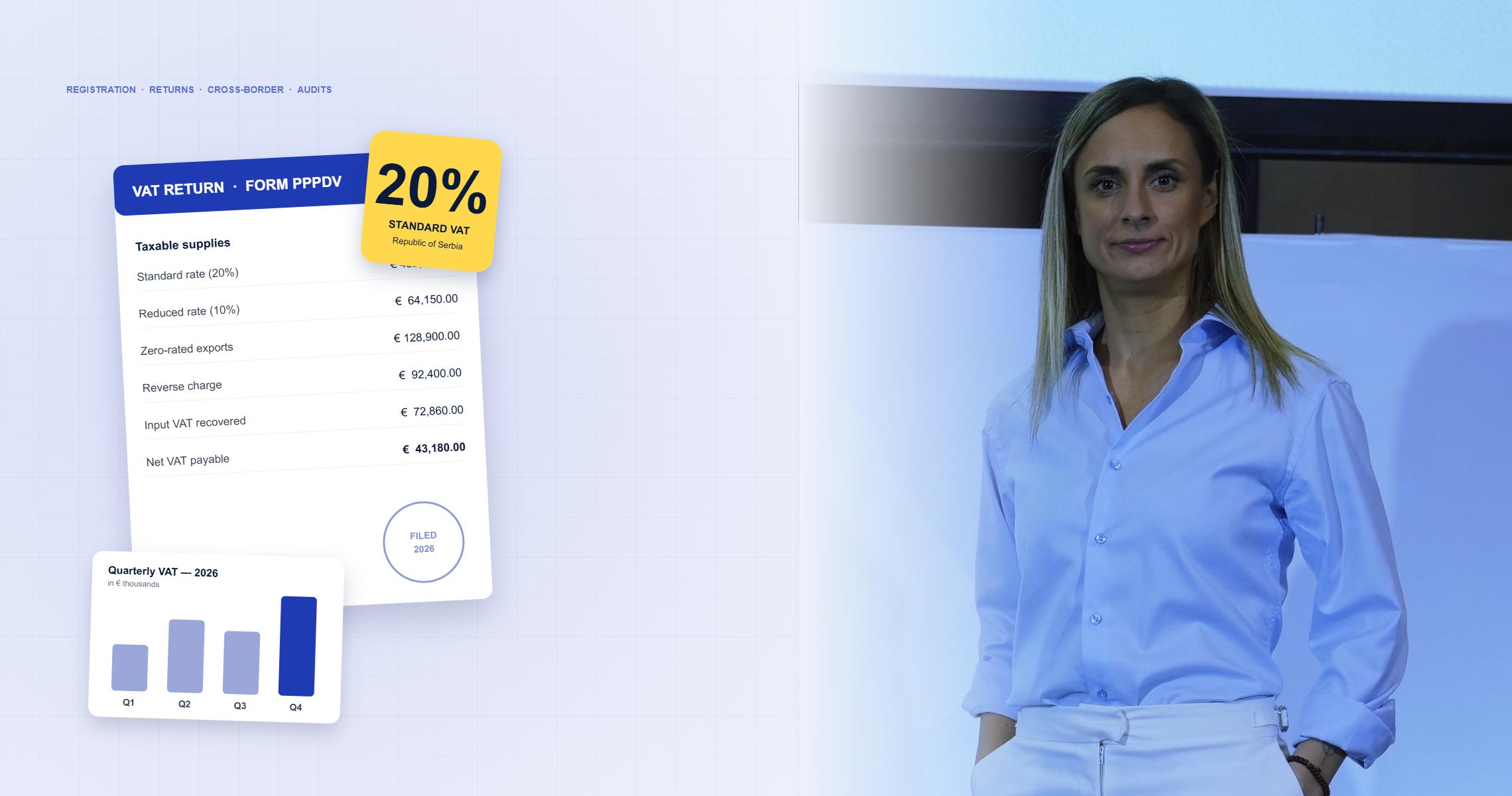
VAT Advisory Overview
Serbian VAT looks simple - 20% standard rate, monthly electronic filings, clear thresholds. Until reverse charge on a cross-border service, non-resident registration requirements, or a tax authority query about input VAT recovery throws everything off. That's where I come in. Big Four (EY) background advising multinationals on Serbian VAT. Direct access from the first call.
How a VAT Engagement Works
Every engagement starts with a free 15-minute call. I review your situation, scope the work, and send you a clear proposal within 24 hours - defined deliverables, fixed fee, no surprise billing.
You work with me directly from first call to final delivery.
Core VAT Services
- VAT registration for foreign companies - including non-resident registration with fiscal representative
- Monthly and quarterly VAT returns - prepared, reviewed, and filed electronically
- Cross-border VAT structuring - reverse charge, place of supply, intra-group services
- Input VAT recovery - refund claims, non-resident recovery procedures, error correction
- Audit defense - tax authority queries, compliance checks, dispute resolution
- Digital services and SaaS - B2B vs B2C treatment, place of supply rules, Serbian-specific obligations
Ongoing VAT Compliance and Support
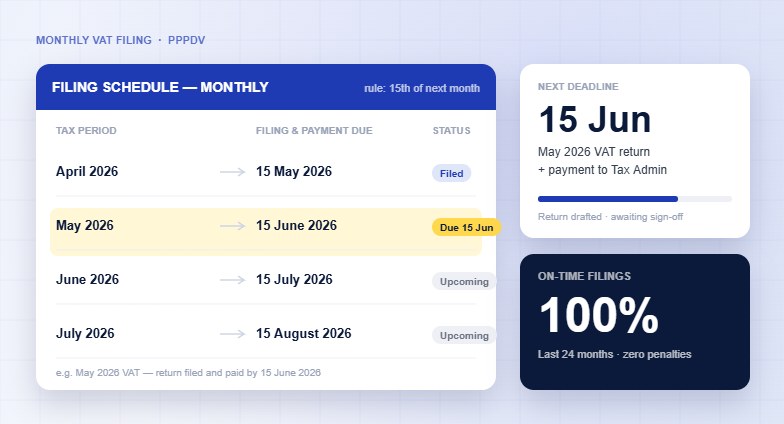
Once you're registered, I keep your VAT position compliant and efficient. Monthly or quarterly returns submitted on time, deadlines tracked, electronic filings handled. When tax authorities reach out - and they do - you have a senior advisor responding within hours, not a service ticket.
Common VAT Scenarios I Solve
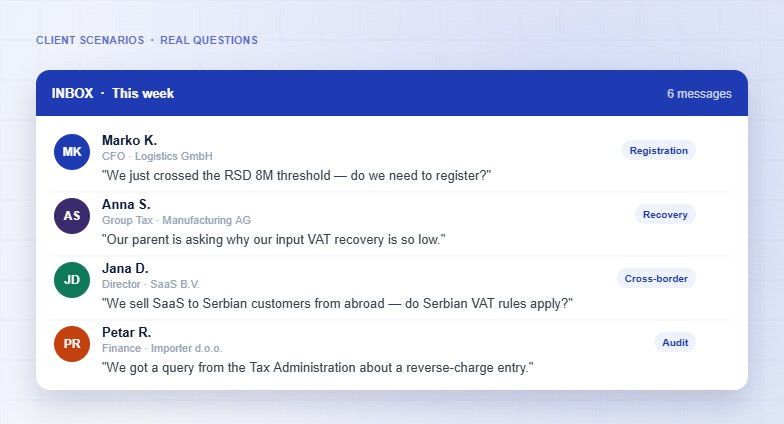
Most clients come to me with one of these:
- "We just crossed the RSD 8M threshold - do we need to register?"
- "Our parent company is asking why our input VAT recovery is so low."
- "We got a query from the Tax Administration about a reverse charge entry."
- "We sell SaaS to Serbian customers from abroad - do Serbian VAT rules apply?"
- "We're importing equipment and the customs VAT calculation looks wrong."
- "Our fiscal representative left and we need a new arrangement."
If any of these sound familiar, you're in the right place.
Fiscal Representation in Serbia for Non-Resident Companies
A foreign company that makes taxable supplies in Serbia without a local entity must register for Serbian VAT through a fiscal representative: a Serbian-resident representative who registers the company, files its returns and shares liability for its VAT obligations. Limited exceptions exist, mainly where every Serbian customer self-accounts for the VAT under the reverse charge.
I handle the full arrangement: assessing whether you need to register at all, setting up the fiscal representation, VAT registration, monthly returns and e-invoicing compliance. If your existing representative arrangement stopped working, I take it over without breaking the filing calendar.


Serbian VAT - Common Questions
What's the VAT registration threshold in Serbia?
For a Serbian business, registration is mandatory once taxable turnover exceeds RSD 8 million in the previous 12 months. A foreign company that makes taxable supplies in Serbia must appoint a fiscal representative and register for VAT whatever its turnover, unless it supplies only VAT-registered businesses. Voluntary registration below the threshold is also possible - sometimes preferable for input VAT recovery.
Do I need a fiscal representative as a non-resident?
Yes. Non-resident companies registering for Serbian VAT must appoint a fiscal representative - a Serbian resident who assumes joint liability for VAT obligations. Selecting the right representative matters.
What's the Serbian VAT rate?
20% standard rate, 10% reduced rate (basic food, medicines, books and newspapers, hotel accommodation, passenger transport, natural gas, heating and tap water). Exports of goods and international transport are exempt with the right to deduct input VAT; financial services and some others are exempt without that right.
How often do I file VAT returns in Serbia?
Monthly for most VAT-registered companies. Quarterly filing is available for smaller taxpayers below a turnover threshold. Returns filed electronically.
Can a foreign company recover Serbian VAT?
Yes, under specific conditions and reciprocity arrangements with the foreign company's home country. Export-heavy businesses can also apply for Predominant Exporter Status for refunds in 15 days instead of 45. The procedure has strict deadlines - most rejections come from procedural errors, not substantive ones.
How does reverse charge work for cross-border services?
For B2B services received from abroad, the Serbian recipient self-accounts for VAT - declared as both output and input on the same return. Sounds neutral, but errors here trigger most of the audit queries I handle.
Do I need to use Serbia's e-invoicing system as a foreign company?
If you make B2B or B2C supplies subject to Serbian VAT, yes - Serbia's electronic invoicing system (SEF) is mandatory. Non-resident VAT-registered companies face the same obligation. Setup typically includes electronic certificate, integration with your accounting software, and proper user permissions - a common pain point for foreign companies entering the market.
Related VAT Reading


